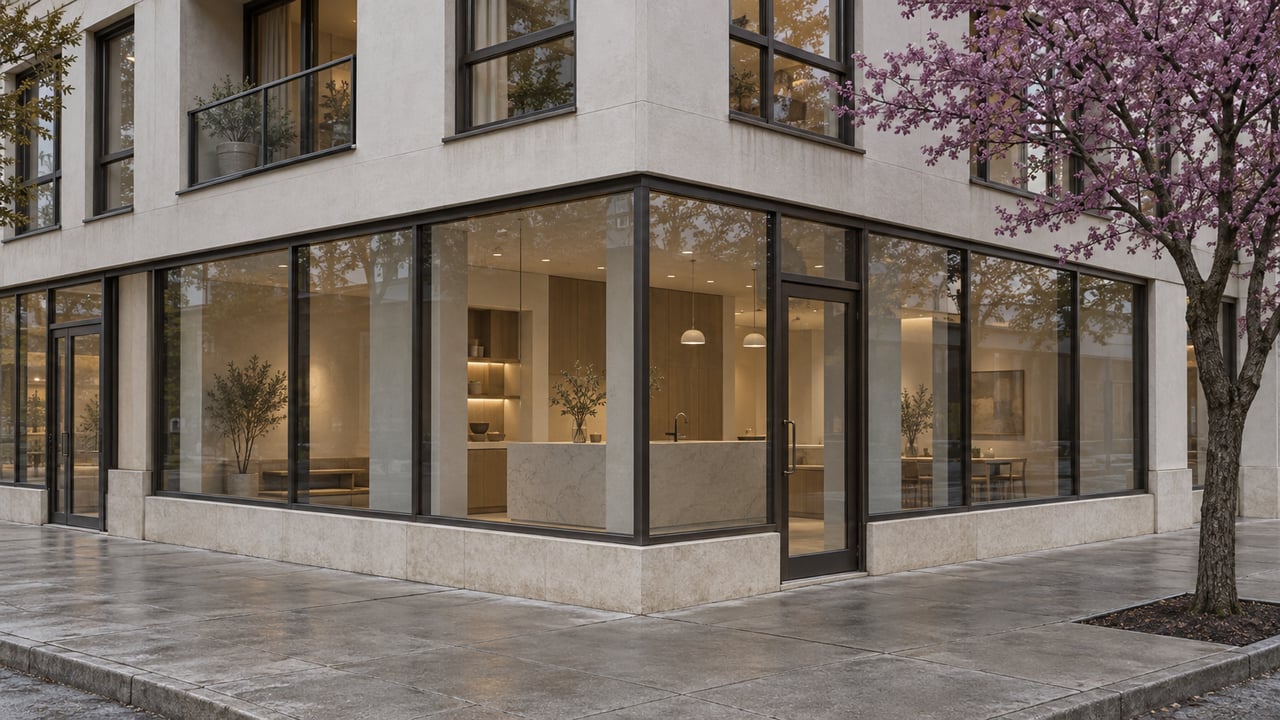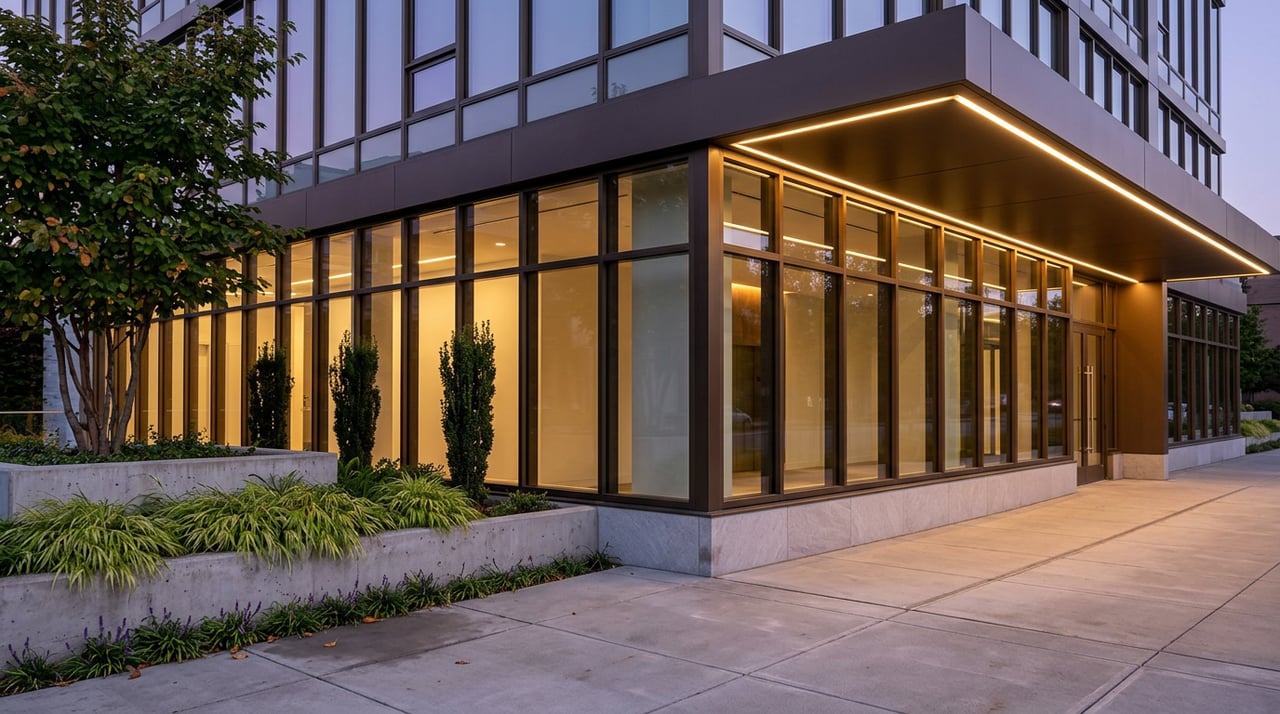
Stand at the Music Row Roundabout on a Tuesday evening and you'll notice something that wasn't true five years ago: people walking somewhere that isn't a parking garage. For most of Music Row's 70-year history as the working center of country, gospel, and Christian music, that wasn't the neighborhood's job. The shingle-sided houses turned into publishing offices weren't built for foot traffic. Nobody put a coffee shop on 16th Avenue South because nobody expected anyone to be standing on 16th Avenue South at 8 a.m. who wasn't already walking into a studio.
That's the piece of the story most coverage of Music Row skips. The headlines are usually about towers rising or historic buildings coming down, framed as a single binary: growth versus preservation. What's actually happening on the ground is narrower and more useful if you live or work here: specific buildings are being forced, tenant by tenant, to answer a question Music Row never had to ask before. What do people who aren't in the music business do here after 5 p.m.?
The Building That Used to Be a Recording Studio
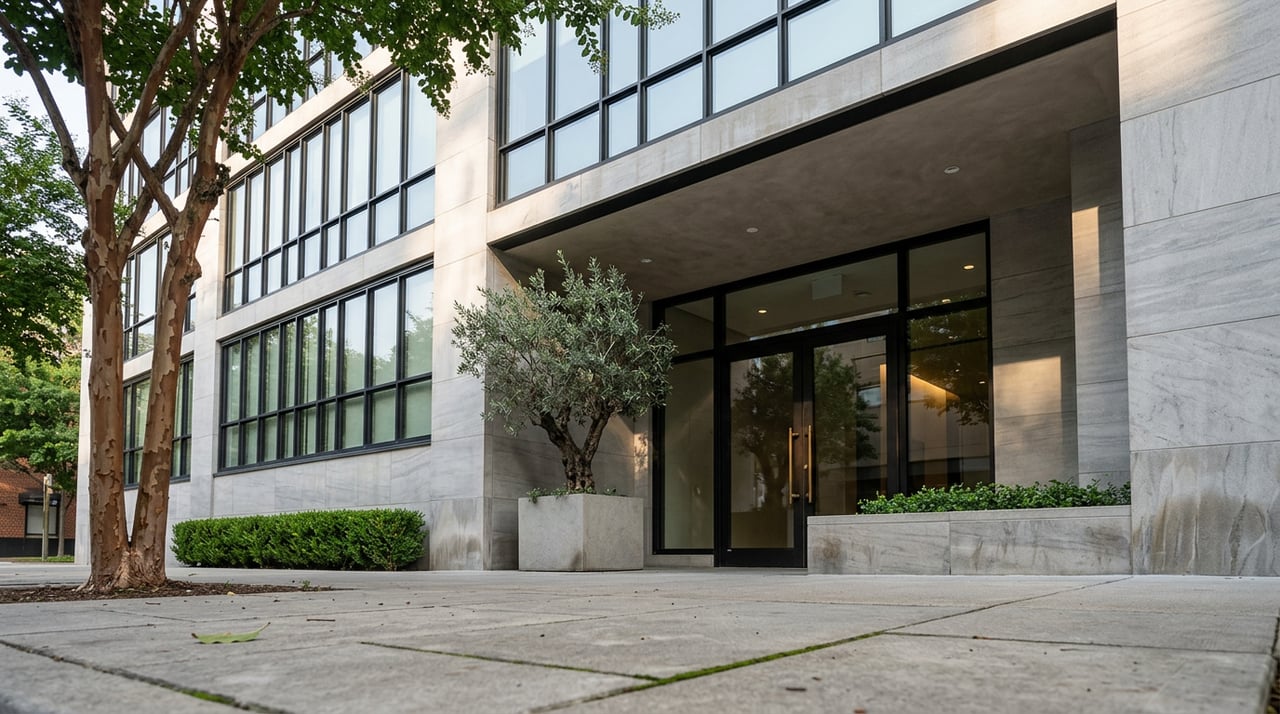
The clearest place to watch this play out is a single address: the Moore Building, a 16-story office tower delivered in 2023 on the former site of Scotty Moore's Music City Recorders, later known as Studio 19. Moore played guitar for Elvis Presley, and the developers, Portman and Creed Investment Company, named the building after him and worked with Rachel Halvorson Designs on interiors that nod to the 1970s. That's the kind of detail that matters if you know Music Row's history and shrugs past you if you don't.
What's more telling than the name is the sequence of tenants that have filled the building's 8,500 square feet of ground-floor retail:
| When | What happened |
|---|---|
| 2023 | Moore Building delivered as a 236,000-square-foot Class-A office tower with 8,500 square feet of ground-floor retail |
| 2024 | Highland Yoga, an Atlanta-born studio brand, opens its first Tennessee location there, its 10th studio overall |
| 2025-2026 | Chaipolitan signs on as the newest tenant, a teahouse and café whose opening has already slipped past an original fall 2025 target, with the owner declining to confirm a new date |
| 2026 | Hive Hospitality, the D.C. group behind two-Michelin-starred Jônt and one-starred Bresca, is reported to be planning a restaurant in the building, per Nashville Business Journal reporting in February |
| July 2026 | Shorenstein acquires the Moore Building for its office portfolio, citing strong leasing momentum |
Read that top to bottom and it stops looking like a random list of openings and starts looking like a building working through a checklist. First a fitness tenant. Then food and drink that doesn't require a full kitchen. Then, if the reporting holds, a chef with a Michelin pedigree. Hive is led by chef Ryan Ratino, whose Jônt operates as a tight, reservation-driven tasting counter. As of the February report, the project had no confirmed name or opening date, so don't plan a birthday dinner around it yet. But the fact that a operator with that resume is even circling Music Row tells you something about what the ground floor here is worth now.
Two Blocks Over, a Different Building Made the Same Bet
The Moore Building isn't running this experiment alone. A few blocks away at 1005 17th Avenue South, the mixed-use building 17th + Grand landed High Point Coffee, a Mississippi-based chain, for its first Nashville location, taking 1,040 square feet on the ground floor. Upstairs, e|spaces runs a 35,000-square-foot coworking operation with more than 90 private offices and a rooftop, steps from the Gulch and Midtown, which tells you the daytime population this retail is built to serve is at least as much office worker and freelancer as it is music-industry veteran.
Two buildings, two different developers, landing on the same conclusion independently is a stronger signal than either one alone. Neither Portman nor the team behind 17th + Grand needed a master plan to figure out that a coffee shop and a place to sit down were missing. They just needed enough new office and residential square footage nearby to make the math work.
Why the Timing Lines Up
That math is showing up in two residential projects that have nothing to do with retail directly but explain why it's arriving now. Albion Music Row is a two-phase development between Broadway and Demonbreun Street that will bring up to 800 luxury apartments to the corridor, with its first phase, a 29-story tower with 458 units, breaking ground in 2024 and, as of an April 2026 report, preleasing ahead of schedule. A few blocks north, at 1740 Division Street, Chicago-based LG Group is building a 20-story tower with 396 market-rate units, sited between Vanderbilt, the Midtown medical district, and downtown. Its first phase, a new US Bank branch fronting Broadway, was already complete as of last fall.
Put nearly 1,200 new residential units within walking distance of a corridor that historically had almost none, and the retail math changes. A yoga studio or a teahouse that wouldn't have penciled out serving only daytime office workers starts to work once there are people living upstairs and next door who need somewhere to be at 7 p.m. on a Tuesday. That's the mechanism, not a marketing narrative about Music Row "coming alive."
What's Already Open If You're Walking It This Month
If you live in the neighborhood right now, here's what's actually operating within a few minutes of the Roundabout, not what's promised:
- Highland Yoga at the Moore Building, the Atlanta brand's first Tennessee studio
- High Point Coffee at 17th + Grand, the chain's first Nashville café
- The Row Kitchen & Pub, which has hosted nightly live music and served Nashville cuisine to songwriters for more than 30 years
- Music Row Bar & Grill at 1000 17th Avenue South, an upscale-casual spot with a rotating menu built around dishes like whipped feta and pan-seared filet
That last two are worth naming because they're the counterpoint to the growth story. The Row and Music Row Bar & Grill weren't part of any developer's tenant plan. They're independent, long-running fixtures that predate the towers going up around them, and they're the reason the corridor had any nightlife at all before this current wave of construction started.
The Part That Doesn't Get Resolved Cleanly
None of this means the tension around Music Row's growth has gone away. Between 2013 and 2019, National Trust for Historic Preservation research documented 50 buildings demolished on Music Row, 38 of them music-related, with 64 percent of that development approved through Specific Plan rezonings. The Metro Planning Commission responded with the Music Row Vision Plan, adopted by a 7-0 vote in June 2019, which divides the corridor into four character areas and tries to balance new construction against the small commercial buildings that still house working studios and publishers. That plan is why a building like the Moore Building exists where a studio once stood, and it's also why plenty of the modest houses along 16th and 17th Avenues are still there, doing exactly what they've done for decades.
If you live on Music Row now, that history is worth knowing not because it changes anything about your Tuesday night, but because it explains why the new retail feels like it's arriving in careful, one-tenant-at-a-time increments instead of all at once. Nobody wants to repeat the demolition years. The compromise seems to be growth that fills in ground floors without touching what's left standing next to them.
What to Watch Next
The honest answer is that nobody knows yet whether Hive Hospitality's Music Row restaurant becomes real, what it's called, or when it opens. Chaipolitan is the more concrete near-term test, though its own timeline has already slipped once and the owner hasn't put a new date on the calendar. Past that, keep an eye on whether Albion Music Row's second phase and the remaining floors at 1740 Division bring enough additional residents to justify a third or fourth building making the same ground-floor bet the Moore Building and 17th + Grand already have.
For now, the honest read is this: Music Row is not becoming a different neighborhood. It's becoming a neighborhood, period, in the sense that it's slowly getting the ground-floor businesses that let people who live and work here actually spend time on the street instead of just parking on it.
If you're watching how Music Row and the surrounding Midtown corridor are changing and want a read on what that means for property values, condo inventory, or timing a move in this part of Nashville, Kate Giarratana tracks these buildings and their leasing activity closely and is glad to talk through what it means for you.